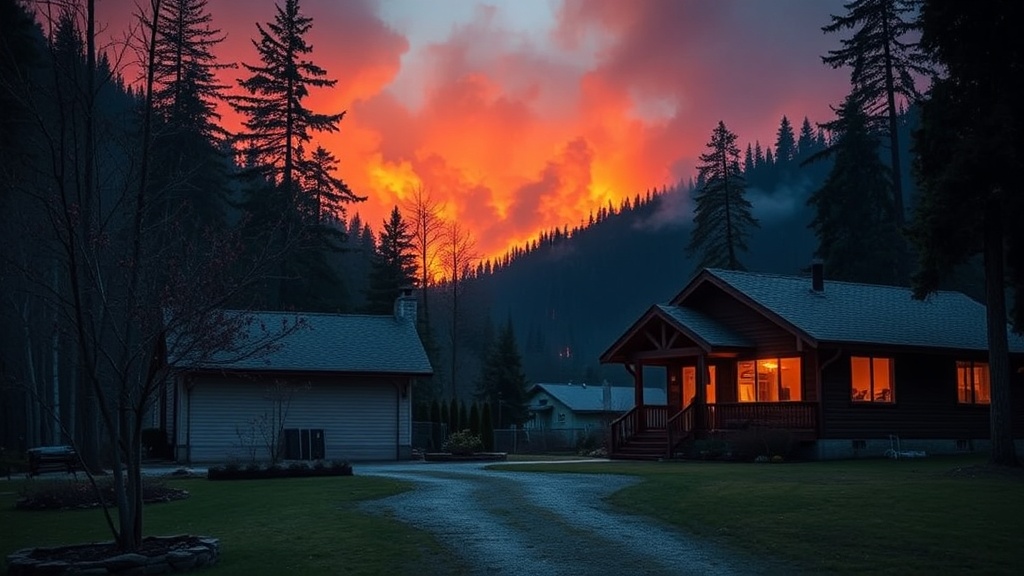
Getting Your Okanagan Valley Property Ready for Local Fire Season

Over 90% of wildfire evacuations in British Columbia occur in areas where residential properties are directly adjacent to wildlands. In the Okanagan Valley, where our homes sit nestled against dense forests and orchards, this isn't just a statistic—it's a reality we live with every single summer. Preparing your home isn't about being an alarmist; it's about understanding the specific environmental pressures of our valley. We live in a unique microclimate where heat builds up quickly, and being proactive with your property maintenance can make a massive difference in how our community stays resilient.
How do I prepare my yard for wildfire season in the Okanagan Valley?
The first thing we need to talk about is what I call the "defensible space." This isn't some abstract concept—it's a practical way to manage your landscaping so that a stray ember doesn't turn your backyard into a furnace. In the Okanagan Valley, our summers are getting longer and drier, which means your yard maintenance schedule needs to be more aggressive than it used to be. We suggest focusing on three distinct zones around your home.
The first zone is the immediate area—within about 1.5 meters of your house. This area should be free of anything flammable. We're talking about dried leaves in your gutters, wood piles against the siding, or even heavy mulch. If you live in a neighbourhood like Upper Mission in Kelowna or near Knox Mountain, you know how fast things can dry out. Keep your deck clear of debris and ensure your gutters are cleaned out regularly. A pile of dry leaves on a cedar deck is a recipe for disaster during a high-wind event.
The second zone extends out to about 10 meters. This is where you can still have plants, but you want to keep them spaced out. Avoid planting dense, shrubby greenery right against your house. If you're in West Kelowna or South Kel Okanagan, you've likely seen how brush can grow thick and fast. Thin out your bushes and ensure there is a gap between your garden beds and any structures. This creates a break that can slow down a ground fire before it reaches your walls.
Where can I find local fire safety resources?
You don't have to guess what's safe. The BC Wildfire Service provides incredible documentation on how to harden your home against fire risks. Additionally, checking in with your local municipal website—whether that's the City of Kelowna or the City of Vernon—will give you specific bylaws regarding fire smart landscaping. We often see neighbors helping neighbors by sharing these resources, so don't be afraid to ask around at your local community center or hardware store about local fire-safe plant varieties.
What are the best fire-resistant plants for our climate?
Choosing the right vegetation is a way to work with the Okanagan Valley environment rather than against it. While we all love a lush, green garden, many of the traditional ornamental plants used in more temperate climates can become a liability here during a dry spell. We recommend focusing on plants that can handle our heat but aren' gracefully manage moisture levels.
- Deciduous Trees: Trees with leaves that drop in the fall, like certain maple varieties, can actually be more fire-resistant than evergreens because they hold less moisture in their needles.
- Succulents and Grasses: Tuff grasses and succulents that stay low to the ground can help with erosion without providing a massive fuel load.
- Avoid High-Resin Plants: Steer clear of heavy conifer-heavy landscaping right near your entrance.
It's also a good idea to look at the FireSmart Canada website. They have specific guidelines that are highly applicable to the Okanagan Valley, helping you understand which plant structures are most dangerous during an ember shower. Remember, an ember can fly much further than a flame; it's the small, dry bits of vegetation that often start the trouble.
How much does property maintenance cost in the Okanagan Valley?
Budgeting for fire-smart landscaping can vary wildly depending on whether you're doing the work yourself or hiring a professional. For many of us living in the Okanagan Valley, the most cost-effective way to start is with a simple weekend of yard work. Clearing out dead brush, trimming low-hanging branches from your fruit trees, and cleaning your gutters are all low-cost tasks that yield high returns in safety.
| Task | Difficulty | Frequency | Impact |
|---|---|---|---|
| Gutters Cleaning | Medium | Twice a year | High |
| \\u0026nbsp; | \\u0026nbsp; | \\u0026nbsp; | |
| Tree Pruning | High | Once a year | Medium |
| Mulch Replacement | Low | Annual | Low |
If you're looking to do more significant work, like removing a mature cedar hedge that's too close to your house, you might want to hire a local arborist. In our community, we have many skilled professionals who understand the specific soil and heat profiles of the Okanagan Valley. Investing in professional tree service might feel expensive now, but it's much cheaper than the potential loss of property value or safety during a fire event.
We've seen many people in the Okanagan Valley neglect the "small stuff"—the little pile of firewood in the corner of the yard or the dried-out weeds in the driveway—only to realize too late how much of a hazard they are. We live in a beautiful part of the world, but that beauty comes with a responsibility to manage the landscape that surrounds us. Stay proactive, stay informed, and let's keep our neighborhoods safe together.